

In the ever-evolving world of content creation, standing out to potential brand partners is crucial. One powerful tool at your disposal is a professional media kit.
In this blog post, I will dive deep into what a media kit is, why it’s essential, and how to create one that sets you apart from the competition!
What is a Media Kit?
A media kit, sometimes called a press kit, is a document that content creators use to showcase their work, audience, and potential value to brands. It’s essentially your digital resume, designed to present your brand in the best possible light and entice potential collaborators.
Why You Should Use a Media Kit
A well-crafted media kit demonstrates professionalism and seriousness about your craft. Brands are more likely to collaborate with creators who present themselves as reliable and prepared.
A media kit allows you to highlight what makes you unique. This is your chance to showcase your niche, style, and the specific audience you engage with, making it easier for brands to see how you fit into their marketing strategies.
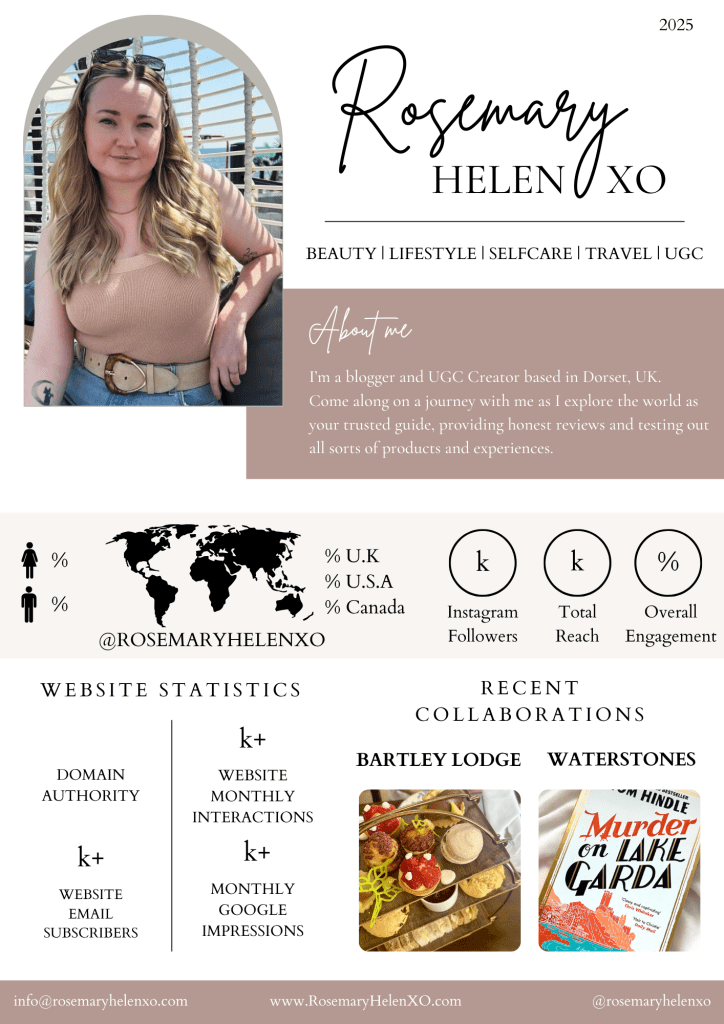
Having all your information in one place makes it easier for brands to assess your suitability quickly. This convenience can set you apart in a crowded field and speed up the decision-making process.
Key Elements to Include in Your Media Kit
About You:- Provide a concise biography that includes your background, interests, and what makes your content unique. This personal touch helps brands connect with you on a human level.
Audience Demographics:- Include detailed insights into your audience. Brands want to know who they’re reaching, so highlight demographics like age, gender, location, and interests.
Social Media Statistics:- Showcase your reach and engagement across platforms. Include follower counts, average likes, comments, and shares to give brands a clear picture of your influence.
Portfolio of Work:- Feature examples of your best content to give brands a taste of your style and quality. Include a variety of formats if applicable, such as videos, articles, or social media posts.
Previous Collaborations:- Highlight past partnerships to demonstrate experience. Include testimonials or case studies if possible, as they provide social proof of your value.
Services Offered:- Clearly outline what you can offer brands, such as sponsored posts, product reviews, or video content. Be specific about the types of collaborations you’re open to.
Avoid putting prices on your Media kit as these tend to change and will cause you to spend more time editing your media kit!
Contact Information:- Make it easy for brands to reach you by including your email address and links to your social media profiles. Ensure this information is up to date.
A professional media kit is an indispensable tool for content creators looking to secure brand collaborations. By presenting your work, audience, and unique value in a compelling way, you can increase your chances of attracting the partnerships you desire.
Subscribe to get the next part in this series straight to your inbox!
Remember, your media kit is often the first impression a brand will have of you—make it count!
Stay ahead of the curve with regular updates, PR invites, and special goodies just for my community.
Join my Instagram broadcast channel, Cosy Content Corner, for exclusive insights and tips tailored for beauty and skincare creators.
Whether you’re looking to refine your content or explore new opportunities, Cosy Content Corner is your go-to hub for inspiration and growth.

Keep an eye out for more of my posts in this Creating your Media Kit series!
Don’t miss out on the chance to elevate your creator journey—join us today and become part of my thriving community!
Stay connected and never miss my next tips by following me on my social platforms and subscribing to my page!!


Discover more from Rosemary Helen XO
Subscribe to get the latest posts sent to your email.

3 thoughts on “Why Every Content Creator Needs a Media Kit, part 1 | RHXO Tips”